






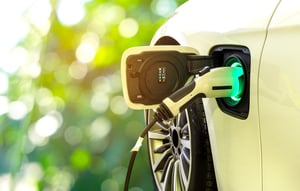
As the world struggles with rising global temperatures, more frequent climate-driven extreme weather, and accelerating emissions, electrification has become a central strategy in the global response to climate change.
From electric vehicles (EVs) and industrial electrification to renewable power generation and resilient grids, policy-makers and industry leaders increasingly view electrification as essential for cutting emissions and adapting to a warming planet. As a result, the global electricity demand is significantly increasing and so is the need for electrical systems and equipment.
In some countries, there are leaders who do not support the transformation from fossil fuels to electricity as a power source, but the broader trend towards electrification continues globally.
Transportation is rapidly electrifying, with millions of EVs now on the road worldwide and more in production. (Apart from electrical cars, buses and trucks etc., in an Asian country as China, there is now an unbelievable number of electrical scooters of different kinds, as the editor of this newsletter recently experienced in Shanghai).
Buildings and urban electrification are accelerating in many advanced economies as heat pumps and electric appliances replace fossil fuel heating and cooking systems.
Electrification of transport, buildings, and industry directly increases demand for electrical systems, infrastructure, and equipment at every level of society. In the transport sector it drives EV charging infrastructure, upgraded distribution grids to handle higher peak loads, transformers, switchgear, and protection systems, and energy storage systems to manage load variability.
In the building sector (homes & commercial), fossil-fuel systems are replaced by electric equipment, such as electric heat pumps, stoves and water heaters, which also entail enhanced electrical systems, installation appliances, protection and control devices.
In the industrial sectors, examples of increased demand for equipment caused by electrification are heavy-duty switchgear, power electronics and battery storage systems.
The overall picture is that when electricity is the dominant energy carrier in society, all sectors become more dependent on Generation, Transmission, Distribution, Conversion (AC/DC, inverters), Protection & controls Storage and Utility/grid planning.
Further information about this topic may be seen e.g. here and here.
(This article is based on various publications posted on the Internet; edited by T.Sollie)