



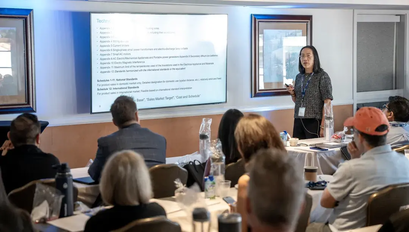



One of my favorite business strategies for success is Begin with the End in Mind, giving credit to Stephen Covey in his book “7 Habits of Highly Effective People – Habit #2.” In our certification world, and when bringing products to market, we need to know where these products are going and what the requirements are for those markets… and… an additional five steps further for products going into hazardous locations and/or explosive atmospheres.
-
Which countries or markets are targeted for the product, and which of the three certification schemes are applicable? (IECEx, ATEX, and/or NRTL).
-
In what areas must a product operate safely, which determines product markings? (Class, Divisions/Zones, and/or Zones?
-
How was the product designed to operate safely in these areas? Which protection concept(s) have been applied?
-
Are we going to use harmonized IEC 60079-X Series or UL/CSA standards for design evaluation and certification?
-
Does the manufacturer have the required quality programs in place? (QAN/QAR)
An explosive atmosphere or hazardous location is an area in which an explosive atmosphere is present, or may be expected to be present, in quantities such as to require special precautions for the construction, installation, and use of electrical and non-electrical apparatus.
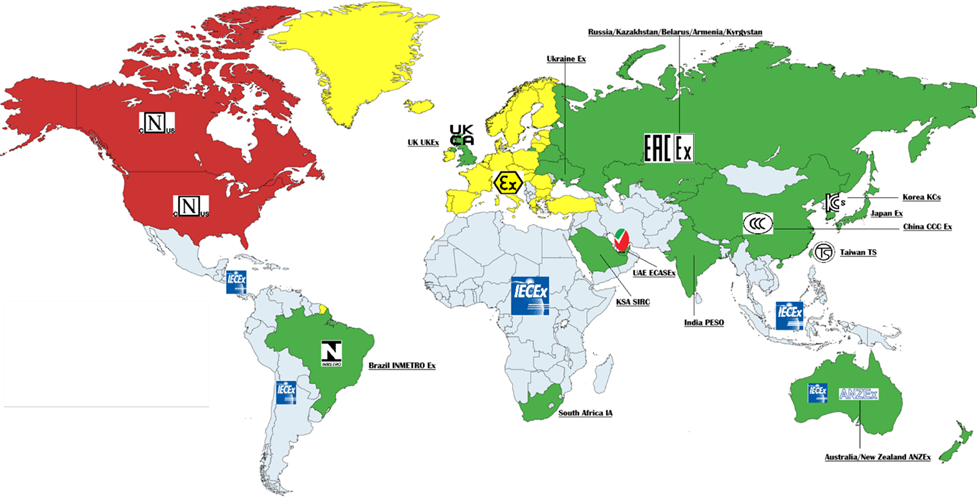
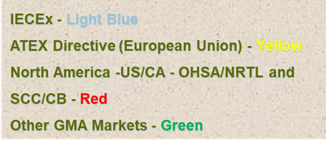
The landscape of the global explosion protection market follows one of three basic certification schemes: IECEx, the European ATEX Directive, and North American (OSHA NRTL/SCC) certifications. Each of these schemes can apply national deviations (country-specific requirements) for a particular market. Each market requires different component approvals and markings. Some markets, even those adopting and following the IECEx harmonized scheme, can apply additional country-specific requirements and markings. Thus, global market access is important for manufacturers to understand for products going into hazardous areas.
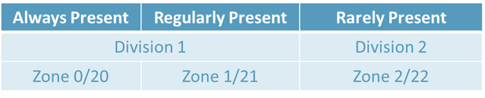
There are two systems used to define classified areas: the Class/Division system, mostly used or understood in North America (United States), and the Zone system, used in most countries across the globe. Both systems describe the same concepts in different ways.
What is the likelihood of a flammable substance being present, and how is the flammable substance categorized?
Class and Division System
-
Class I – Contains flammable gases or vapors in quantities large enough to produce an explosion.
-
Class II – Is hazardous due to the presence of combustible dust in the air.
-
Class III – Contains easily ignitable fibers or flyings in the air. However, the quantities of fibers and flyings suspended in the air are not likely to be large enough to cause an explosion.
-
Division 1 – There is a high probability of an explosive atmosphere in normal operation. This can be for part of the time, up to all the time.
-
Division 2 – There is a low probability of an explosive atmosphere being present during normal operation.
Zone System
(Gas) “EPL” / (Dust) “EPL”
-
Zone 0 “Ga” / Zone 20 “Da” – Flammable material is present continuously (> 1000 hours/year, ~11%)
-
Zone 1 “Gb” / Zone 21 “Db” – Flammable material is likely to be present (10–1000 hours/year, ~0.11% to 11%)
-
Zone 2 “Gc” / Zone 22 “Dc” – Flammable material is not likely to be present (< 10 hours/year, ~0.11%)
EPL = Equipment Protection Level
Is the hazardous area that the product will be used in potentially gas, dust, or both? Identified here is our first concern: there are two divisions in the Class/Division system and three zones in the Zone system. We see that these do not align, causing potential harmonization challenges in North America.
The National Electrical Code (NEC 70) and Canadian Electrical Code (CEC) CSA C22.1:24 allow for Class/Division markings, Class/Zone markings, and/or Zone markings in Canada to help with harmonized alignment. Acceptance by Authorities Having Jurisdiction (AHJs), product competition, and customer acceptance dictate which markings need to apply—or whether both can be applied—to a product.
To avoid a fire or explosion, a product design must employ one or more protection concepts to remove one of the elements required for fire/explosion: heat, fuel, and/or oxygen.
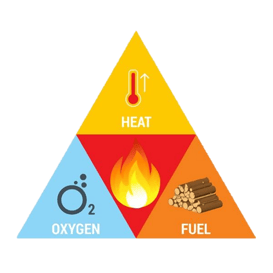
Protection methods include, but are not limited to, Ex “d” flameproof enclosures, Ex “p” purged or pressurized enclosures, increased safety Ex “e,” intrinsic safety Ex “i,” and encapsulation Ex “m,” and so forth. These protection concepts either contain any ignition within the equipment so it does not ignite the surrounding area, dilute or restrict flammable substances inside the equipment, and/or limit the energy of circuits to defined parameters that prevent ignition. Protection concepts apply to both electrical and non-electrical apparatus.
Once protection concept(s) are selected, the manufacturer must decide which standards will be utilized for design requirements and evaluation/certification: harmonized IEC 60079-X series or national UL/CSA standards. The primary factor in this decision is the target market(s) for the product. A product intended for global markets is best served by IEC harmonized standards. If the market is limited to North America, UL/CSA standards might be the better choice.
Each certification scheme utilizes different certification options such as type approval or listing for continuous manufacturing, or unit verification certification (UVC), limited production certification (LPC), or field labeling for one-off or batch production. An NRTL listing requires quarterly factory inspections of manufacturing sites, whereas type approvals for IECEx/ATEX require quality programs (QAR/QAN).
These quality programs (QAR/QAN) follow ISO 80079-34, which is derived from and includes ISO 9001 requirements, along with additional competence and technical requirements based on the protection concepts applied. For new applicants and/or manufacturers, these requirements can sometimes be overwhelming, making UVC and/or LPC more feasible options.
A review of what we learned and why it is important:
-
What is our market? – This determines the compliance scheme (IECEx, ATEX, and/or NRTL)
-
What hazardous area or explosive atmosphere will my product be exposed to? (Dust/gases)
-
What is the likelihood of the flammable substance being present? (Zones and/or Class/Divisions or Class/Zones)
-
How many of the same products will be produced? (Type approval, UVC, listing, LPC, or field labeling)
-
Does our manufacturing have the quality systems, certifications, and/or NRTL follow-up services in place? (QAR/QAN requirements)
-
What protection method(s) are utilized in my design? (Flameproof, purge or pressurization, increased safety, intrinsic safety, etc.)
-
Can harmonized standards be utilized to achieve certifications? (60079-X standards or country-specific)
-
Will the design utilize approved components? Which certifications must they have? (IECEx, ATEX, NRTL)
Beginning with the end in mind will help ensure a successful certification program, allow acceptance by specific agencies and country requirements, save time to market, and reduce development and production costs.